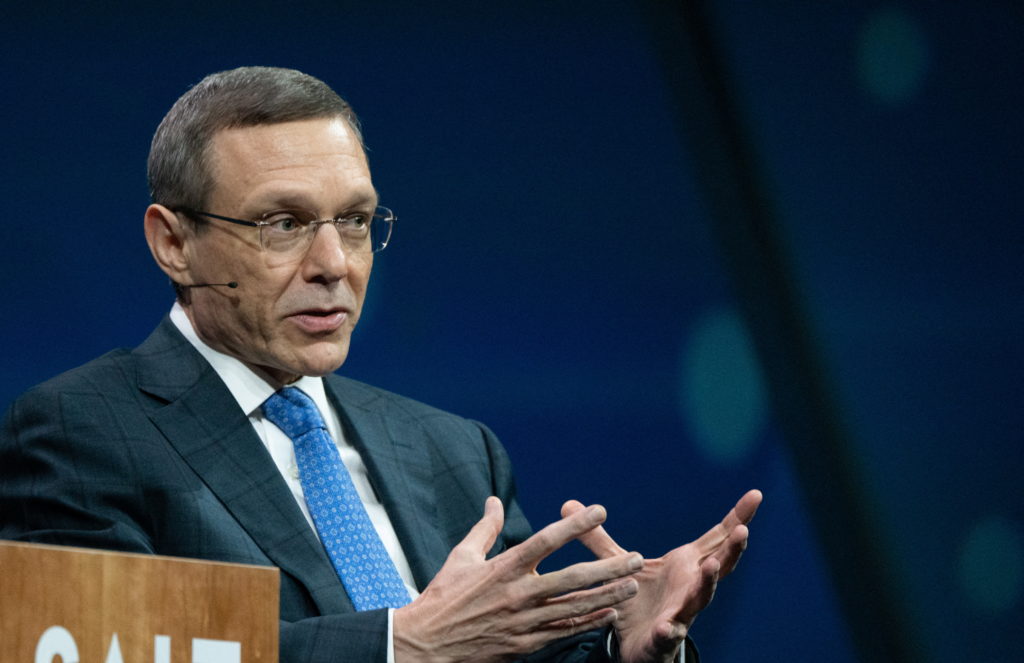
Avi Loeb was wrapping up the first meeting of his newly formed scientific advisory council when his team sent a formal request to the Pentagon: more than 50 videos, images, and other documents related to known UAP incidents. The request was, by any measure, an opening bid. What comes back — if anything comes back — may tell us more about the new White House UFO architecture than any press release will.
The story here is not simply that a Harvard astronomer with a history of provocative claims has been handed influence over the government's most sensitive unidentified phenomena inquiry. It is that the entire apparatus assembled under President Donald Trump's transparency directive is built on a structural contradiction it has not attempted to resolve: the White House is convening panels, advisory councils, and governance boards to investigate UAP, while the Pentagon office assigned to actually investigate UAP says it has found no evidence of alien life.
That tension runs directly through Loeb.
A Polarizing Pick at the Center of the Machine
Loeb, a cosmologist who ran Harvard's astronomy department until 2020, was appointed by the White House to lead a scientific advisory council tasked with investigating the national security risks posed by unidentified aerial phenomena. As the Associated Press reported through journalist Collin Binkley — and PBS NewsHour published in full — the council reports to a broader UAP Governance Board overseen by the Office of the Director of National Intelligence. That board held its first meeting in June 2026, following Trump's earlier directive to the Defense Department to review government files related to extraterrestrial life.
Loeb's résumé is legitimate. He authored hundreds of papers on black holes and galaxies. His controversy is also genuine. In 2017, when an interstellar object passed through the solar system, Loeb proposed publicly that it could be a thin light sail from an alien spacecraft — a claim that generated headlines and scientific pushback in roughly equal measure. He went on to found the Galileo Project at Harvard, which in 2023 retrieved hundreds of small metallic spherules from the Pacific Ocean floor near a possible 2014 meteor impact site. Loeb suggested the spherules might have originated from a distant planet or alien technology. Other researchers said the material was most likely volcanic rock or coal ash.
Steve Desch, an astrophysicist at Arizona State University who has directly challenged Loeb's methods, told the AP that Loeb uses flawed approaches to reach extreme conclusions — and that Loeb's appointment to the White House panel casts doubt on the entire endeavor. "I don't know what's going to come of this," Desch said, "but we're not going to get any closer to answering these questions with him in charge."
"I don't know what's going to come of this"
Sean Kirkpatrick, the physicist who previously ran the Pentagon's All-domain Anomaly Resolution Office, was more pointed. According to the AP's reporting, Kirkpatrick said Loeb is not viewed favorably in the scientific community and lacks national security experience, and that the makeup of Loeb's team suggests the White House is more interested in fringe theories than hard science. The White House did not respond to the AP's request for comment.
Loeb's response to his critics has been consistent and practiced. "It's like a detective story," he told the AP. "It's a lot of fun, as long as you don't pay too much attention to the critics." He has said he is approaching the UAP question from a national security perspective, starting with the assumption that the phenomena are human-made, and working outward from there. "At a time when science is not so much celebrated," he said, "this is an opportunity to actually do good for all sides involved."
His hand-picked council includes more than a dozen scientists and UFO activists — a composition that itself became a news story. Among the members is Timothy Gallaudet, a retired rear admiral who has publicly warned about UAP controlled by what he describes as nonhuman intelligence and has claimed the United States has recovered crashed aircraft. No primary source documents have been cited to support those specific claims, and Gallaudet has not produced official records substantiating them. Also on the team is Ben Lamm, a billionaire entrepreneur whose primary public profile involves de-extinction biotechnology.
The council meets behind closed doors. Loeb has promised public briefings and a website.
The Release Record and What It Doesn't Settle
Trump's transparency push has produced visible results on paper. The Pentagon has released three batches of UAP-related files — ranging from decades-old FBI reports to more recent military video — with The Debrief reporting in June 2026 on what the releases contain and, critically, what they don't. The Pentagon's own AARO, the office that replaced earlier UAP programs, has maintained throughout this period that it has seen no evidence of alien life. That institutional position has not changed despite the file releases, the governance board, the advisory council, or the executive directive.
This is the contradiction that the current UAP architecture has not answered. Trump's directive, the UAP Governance Board, and Loeb's scientific council all signal seriousness. The Pentagon's frontline investigative office signals the opposite. Whether that gap reflects genuine disagreement inside the government, compartmentalization that keeps AARO outside certain programs, or simply bureaucratic inertia is exactly what the oversight apparatus is supposed to clarify — and hasn't.
DefenseScoop reported in December 2025 that Congress wants more information about the military's UAP intercepts around North America, a signal that legislative pressure has not eased. A bipartisan congressional faction has continued pushing the White House to go further. Some Republicans have amplified claims that the U.S. is actively concealing evidence of alien encounters.
Luis Elizondo, the former AATIP director who helped bring the UAP issue into mainstream debate, appeared on Sean Hannity's program alongside Representative Tim Burchett to discuss what they characterized as the Pentagon's deliberate suppression of UAP information. That episode, circulated through a lower-credibility aggregation site, claimed that private defense contractors exploit legal loopholes to bypass FOIA requests and that UAP are deliberately targeting nuclear infrastructure. These are serious allegations, attributed to named individuals with relevant backgrounds — but they come without primary documents, official responses, or independent corroboration. They should be treated as contested claims, not established facts.
Separately, a blogger named Jesse Michels has promoted the account of Jordan Jozak, who claims he was recruited at age nine through a GATE program in rural New York and subjected to remote-viewing experiments and UAP-related testing at a Catholic-affiliated special education facility in Lackawanna County, allegedly with MITRE Corporation's involvement. Congressman Eric Burlison has reportedly been investigating MITRE's role in UAP legacy programs. Jozak's account, as presented through a tier-4 source, is unverified and rests entirely on personal testimony. It is worth noting precisely because Burlison is a sitting congressman conducting what appears to be an active inquiry — but the claims themselves have no documentary support in the materials available here.
The MITRE angle connects to a broader unresolved question: how much of the UAP apparatus has been insulated from congressional and public oversight through private contractor structures? That question predates the current administration and has never received a satisfying answer.
What the Structure Suggests
Loeb said something in his AP interview that deserves more attention than it received. Asked about cover-up theories, he declined to endorse them. "My impression," he said, "is the government is baffled by not being able to infer the nature of some of these objects." That is a different claim than the one circulating in UFO advocacy circles, and it comes from the man the White House just handed the most prominent scientific role in its UFO inquiry.
If Loeb is right — that the government is genuinely puzzled rather than deliberately concealing — then the question is whether his council is structured to actually produce answers, or whether it is designed primarily to demonstrate action. The group meets in private, its charter has not been published, the statutory basis for its authority has not been disclosed, and the Pentagon has not confirmed it will honor the document request Loeb's team already sent.
The UAP Governance Board's first meeting came and went without a public readout. The scientific advisory council's composition leans toward advocacy as much as credentialed scientific inquiry. The Pentagon's AARO continues to say, officially, that there is no evidence of alien life.
Those three facts, sitting next to each other, describe a structure that has the shape of transparency without yet demonstrating its substance.
The specific thing to watch is simple: whether the Pentagon responds to Loeb's document request, and what, if anything, it produces. That answer — or the absence of one — will define whether this council has actual access or merely the appearance of it.