In January 2021, Den of Geek promoted a live interview with its UAP contributor Alejandro Rojas, who was sitting down with Ben Hansen — described by the outlet as a former federal agent turned paranormal investigator and the host of a new Discovery+ series called UFO Witness. It was a fairly standard celebrity-adjacent UAP segment. What makes it worth revisiting now is what it reveals about the infrastructure Rojas was already building around it.
By 2024 and into 2025, that infrastructure had grown into something harder to categorize. Open Minds UAP News — Rojas's primary vehicle — operates simultaneously as a web show on openminds.tv, a podcast distributed through Spreaker, and a Patreon-supported production. Rojas writes separately for Den of Geek. He pulls in video submissions from Enigma Labs, the UAP data platform, for on-air analysis. His guests have included a sitting Science professor, a science journalist from a mainstream publication, and the former director of the Pentagon's own UAP research office. The result is a media operation that sits at an unusual intersection: independent enough to book fringe theorists, credible enough to attract institutional figures, and financially diversified enough to keep running without a traditional editorial backer.
By 2024 and into 2025, that infrastructure had grown into something harder to categorize.
That combination is worth examining carefully, because in the UAP space, the architecture of a media outlet often tells you as much as its content.
A Platform With Range — and Its Limits
The breadth of Rojas's booking strategy is not accidental, and it is not uniform in quality. Consider the span of three episodes across roughly fourteen months. In March 2024, Open Minds UAP News covered the Pentagon's UAP Historical Report from AARO — described in episode materials as controversial — and paired that news segment with an interview featuring Dr. Michael Masters, identified as a professor of Biological Anthropology, discussing what Masters calls the Extratempestrial Model. Masters's hypothesis, as framed in the episode, is presented as an alternative to the standard extraterrestrial hypothesis: the idea, roughly, that UAP occupants may be future humans traveling back through time rather than visitors from another star system. The episode treats this as a scientific hypothesis worth exploring alongside a government report — which is a particular editorial posture, neither credulous nor dismissive, but one that implicitly elevates a speculative academic framework to the same conversational tier as an official Pentagon document.
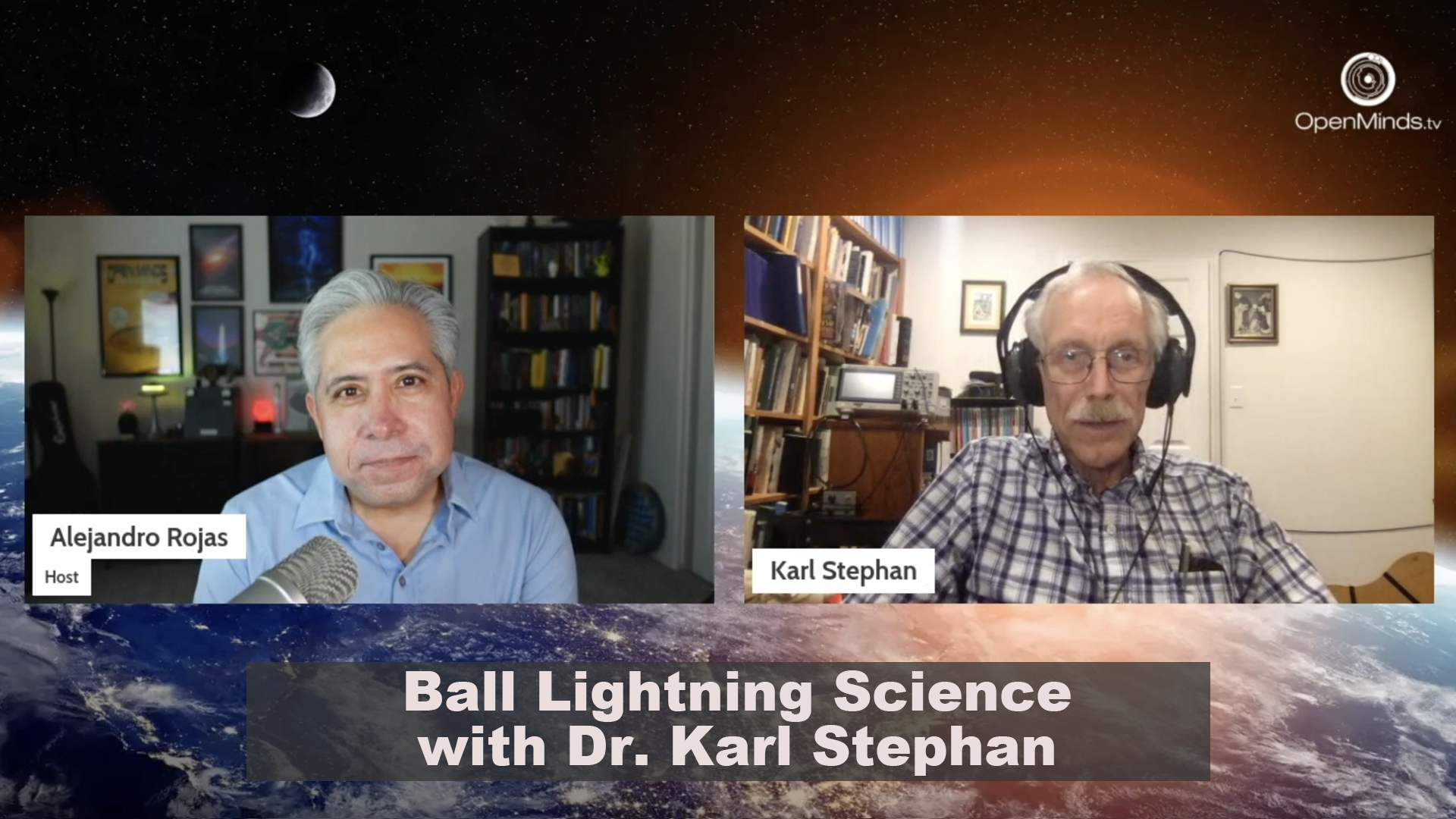
Two months later, in May 2024, Rojas hosted journalist Sarah Scoles, who has covered UFOs for mainstream publications, to discuss her experience reporting the beat. That same episode included updates on former AARO director Sean Kirkpatrick — who led the Pentagon's UAP research office before departing — and links to specific Enigma Labs video submissions for audience review. In late May 2024, another episode brought in Dr. Karl Stephan to discuss ball lightning as a potential explanation for some UAP reports, alongside news of the passing of Dr. Bruce Maccabee, a longtime figure in UFO research circles. And in April 2025, an episode titled where the program goes from here examined the broader state of UAP research and the path forward, again mixing Enigma Labs video analysis with headline coverage.
What you see across these episodes is a consistent format: a news round-up anchored to real institutional developments, video analysis sourced from Enigma Labs, and a featured interview guest who ranges from scientifically credentialed to television-entertainment adjacent. The format is disciplined. The guest selection is not always.
That inconsistency is not a minor editorial quirk. In a subject area where the line between legitimate anomaly research and motivated belief is already blurry, the decision to place a fringe temporal hypothesis and an official government report in the same conversational frame — without a clear signal to the audience about the evidentiary difference between them — is a meaningful choice. It may be entirely intentional. Rojas has never, to public knowledge, claimed to be running a peer-review process. But it does raise a question about what the platform is optimizing for: audience breadth, intellectual range, or something closer to agnosticism about the quality of claims.
The Institutional Connections Are Real
Set aside the fringe bookings for a moment, because the institutional connections in Rojas's network are genuine and worth tracking on their own terms.
Sean Kirkpatrick, who directed AARO from its founding through his departure, appeared as a subject in the May 2024 episode of Open Minds UAP News. The episode description references updates involving Kirkpatrick and AARO in the context of congressional activity — though the specific nature of those updates is not detailed in available episode materials. What is clear is that Kirkpatrick, who has said publicly that he reviewed significant UAP evidence including materials related to the Nimitz encounter and remained unconvinced of non-human intelligence, is a figure Rojas's program tracks closely. That is appropriate: Kirkpatrick is arguably the most consequential official to have led a U.S. government UAP investigation since the closing of Project Blue Book, and his assessments carry institutional weight regardless of whether one agrees with his conclusions.
The AARO UAP Historical Report, which AARO released in early 2024, appears in the March episode as a news item described as controversial. The report itself — a government document intended to review the historical record of UAP-related programs — drew criticism from some UAP researchers and advocates who argued it dismissed or minimized evidence they consider significant. That criticism is a legitimate story. But the episode's framing of the report as simply controversial, placed alongside a temporal-travel hypothesis, does not fully convey the specific nature of the dispute: that some of the most vocal critics of the AARO report are people with a direct interest in its conclusions, while others are independent researchers with more disinterested concerns about methodology.
Enigma Labs occupies a different but equally interesting position in this network. The platform, which aggregates user-submitted UAP sighting data and video, appears as a recurring content partner across multiple Open Minds episodes — providing video links that Rojas and his audience then analyze on air. This is a functional editorial partnership, even if it is not described as one. Enigma Labs benefits from the exposure; Open Minds benefits from a steady stream of visual content. What neither the show nor Enigma Labs has publicly detailed, at least in available materials, is the vetting process — if any — applied to submissions before they appear on air as subjects of serious analysis.
Den of Geek, the entertainment and pop culture outlet where Rojas also publishes, adds another layer. Den of Geek is not a UAP-specialist publication; it covers film, television, comics, and genre entertainment. Rojas's byline there places UAP coverage inside an entertainment context by default, which shapes how those articles are likely read by Den of Geek's core audience. It also means Rojas is simultaneously operating as a specialist UAP journalist for one audience and as an entertainment-adjacent UAP writer for another — a dual positioning that is commercially sensible but editorially unusual.
The Patreon funding model matters here too, though for structural rather than conspiratorial reasons. Audience-supported journalism creates a direct financial relationship between a creator and the people most committed to the subject matter — which, in UAP coverage, tends to mean people who are already convinced something significant is being hidden. That audience dynamic does not prove editorial capture. But it does create incentives worth naming: the most engaged Patreon supporters in a UAP show are probably not people who want to hear that the AARO report was mostly right.
What the Architecture Suggests
None of this is damning. Rojas has built something real — a multi-platform UAP media operation that has, over four years, tracked genuine institutional developments, hosted credentialed researchers, and maintained enough production consistency to keep an audience. In a field dominated by either breathless true-believers or reflexive debunkers, that is not nothing.
But the architecture of Open Minds UAP News — the mixed-credibility guest roster, the Enigma Labs video pipeline, the Patreon dependency, the simultaneous presence in entertainment and specialist media — creates a platform whose editorial identity is genuinely difficult to pin down. It is not a news organization in the traditional sense. It is not purely advocacy. It occupies a middle space that the UAP beat, more than almost any other, tends to reward: curious enough to take claims seriously, credentialed enough to attract real sources, and flexible enough to book almost anyone.
The specific question worth watching is how Open Minds UAP News handles the next major institutional development — whether that is the second volume of the AARO Historical Records Report, any future congressional hearings on UAP, or a significant new disclosure from the Pentagon. The editorial choices made in those moments, about which guests are brought in and how their claims are contextualized against official records, will say more about what this platform actually is than any single episode has so far.