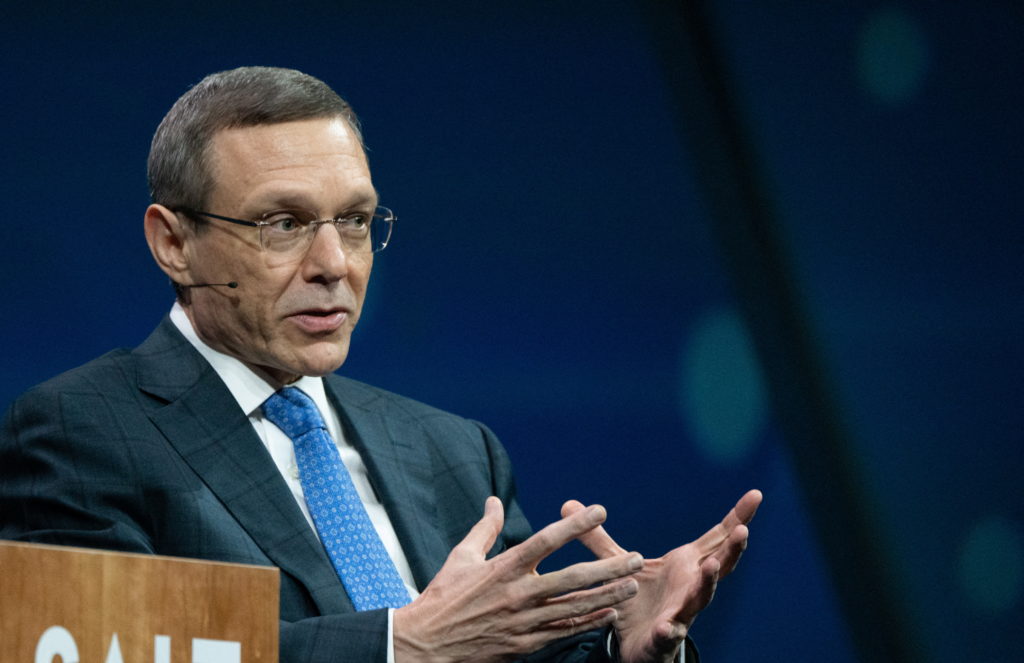
On June 30, 2026, the Associated Press reported that the White House had tapped Avi Loeb, a Harvard cosmologist with a long record of splashy extraterrestrial theorizing, to lead a new scientific advisory council tasked with studying the national security risks posed by UFOs. The appointment, reported by Collin Binkley for the AP and picked up widely, was framed as a natural extension of President Donald Trump's earlier directive to his administration to provide more transparency on questions of UFOs and alien life. What it actually represents — who benefits, who is excluded, and who is being asked to trust whom — is considerably more complicated.
Loeb is not a fringe figure, exactly. He served as chair of Harvard's astronomy department for nearly a decade, authored hundreds of peer-reviewed papers on black holes and galaxy formation, and built a legitimate reputation in cosmology before his career pivoted in 2017. That pivot began when an interstellar object passed through the solar system. While other scientists proposed conventional explanations — a comet, a chunk of ice — Loeb publicly suggested it might be a thin "light sail" detached from an alien spacecraft. He turned that theory into a book. He founded the Galileo Project at Harvard, with a stated mission to search for artifacts from alien civilizations. In 2023, his team used magnets to retrieve hundreds of small metallic spherules from the floor of the Pacific Ocean, near the possible site of a 2014 meteor crash, and Loeb suggested they came from a distant planet or, alternatively, from alien technology. Other scholars said the spherules were probably volcanic rock or coal ash.
Sean Kirkpatrick, the physicist who previously led the Pentagon's All-domain Anomaly Resolution Office — the office tasked with investigating UAP — told the AP that Loeb is "not viewed favorably" in the scientific community and lacks national security experience. Kirkpatrick said the makeup of Loeb's team suggests the White House is more interested in fringe theories than hard science. The White House did not respond to a request for comment about the criticism, the AP noted.
Loeb, for his part, is unbothered. "It's like a detective story," he told Binkley. "It's a lot of fun, as long as you don't pay too much attention to the critics." On the substance, he said he's approaching UAP from a national security perspective, starting with the assumption that the objects are human-made — a methodologically conservative position that sits awkwardly alongside his public record.
"It's a lot of fun, as long as you don't pay too much attention to the critics."
A Council Built Around Extraordinary Claims
The composition of Loeb's advisory council is where the story gets genuinely strange. Among the scientists and "UFO activists" Loeb has hand-picked — his words, per the AP — is Timothy Gallaudet, a retired rear admiral who has publicly warned about UAP controlled by what he calls "nonhuman intelligence" and has claimed that the United States has recovered crashed aircraft. No evidence has been publicly presented to support those claims, and the precise basis for Gallaudet's assertions remains unverified. Also on the council is Ben Lamm, a billionaire entrepreneur whose primary public profile involves efforts to revive extinct species. The council's scientific credibility, to put it gently, is contested.
After the council's first meeting, Loeb's team sent a request to the Pentagon for more than 50 videos, images, and other documents related to known UAP incidents, according to the AP. What happens to that request — whether the Pentagon complies, partially complies, or stonewalls — will be an early and concrete test of whether this apparatus has any real access or whether it's decorative.
The council reports to a new UAP Governance Board overseen by the Office of the Director of National Intelligence, which itself was created in response to Trump's transparency directive and met for the first time in June, the AP reported. So the chain runs: Trump directive → UAP Governance Board (ODNI) → Loeb's scientific advisory council → pending Pentagon document request. At each link in that chain, the key question is the same: does this body have actual authority, or is it a pressure-release valve designed to absorb public demand for disclosure without producing it?
The Pentagon's own All-domain Anomaly Resolution Office, meanwhile, maintains officially that it has seen no evidence of alien life. That office has been tasked with gathering information on alleged government UAP activity since 1945, according to NBC News. The gap between what AARO says publicly and what figures like Gallaudet claim privately is not a new tension — it has defined this beat for years — but the White House has now formally institutionalized both sides of that contradiction inside the same advisory structure.
The Edges of the Network
Two threads running through the current moment deserve scrutiny that they haven't yet received in mainstream coverage.
The first involves the MITRE Corporation. DefenseScoop reported in December 2025 that Congress wants to know more about the military's UAP intercepts around North America — but a separate, lower-credibility account published on the UFOs-Disclosure blog in June 2026 claims that Congressman Eric Burlison is actively investigating MITRE for its role in what the post calls "UFO legacy efforts." MITRE is a nonprofit that manages federally funded research and development centers and has deep, longstanding ties to the national security apparatus. The blog post also features claims from a man named Jordan Jozak, who says he was recruited from a gifted-and-talented education program in rural New York at age nine, subjected to experiments involving remote viewing and brain mapping at a Catholic-affiliated special education facility in Western New York called Baker Victory Services, and that MITRE was involved in operating a "dual-use defense contractor-backed program" inside that facility. Jozak made these claims in a YouTube interview with Jesse Michels. The account is vivid, specific, and entirely unverified. The sourcing is a tier-four advocacy blog. None of it has been independently confirmed. But Burlison's reported interest in MITRE — if accurate — connects an established institution to questions that, until now, have lived almost entirely in fringe circles. That connection is worth watching.
The second thread involves Luis Elizondo and the ongoing contest over his credibility. Elizondo, the former director of the Pentagon's Advanced Aerospace Threat Identification Program, has become a fixture of the disclosure circuit. A June 30 NewsNation report noted that Elizondo is denying allegations that he was tied to UAP secrecy efforts — a significant reversal of his public posture as a whistleblower pressing for transparency. A UFOs-Disclosure blog post from the same week promoted a YouTube appearance by Elizondo on Sean Hannity's show, in which Elizondo and Representative Tim Burchett allegedly discuss how private defense contractors exploit legal loopholes to bypass FOIA requests and why UAP are "deliberately targeting sensitive American nuclear infrastructure." Those claims are presented with no supporting documentation. The blog framing is explicitly advocacy. Still, Elizondo's continued presence at the center of this story — now apparently defending himself against allegations while simultaneously making new ones on a partisan media platform — reflects how thoroughly the disclosure ecosystem has become entangled with political and media incentives that are not primarily about evidence.
That entanglement matters because it shapes what gets amplified. The Next News Network, another tier-four source in this space, published a post in June 2026 arguing that the "UFO cover-up is finally cracking under Trump-era pressure" and that "the level of detail is increasing," making the "standard media ridicule campaign look weaker by the day." The framing is explicitly political — "America First," in their words — and the post presents no new evidence. But it is part of a broader rhetorical environment in which Trump's involvement in UAP disclosure is being constructed as a populist accountability story, regardless of whether the institutional machinery being built actually produces accountability.
Loeb himself is careful to avoid that framing. He told the AP he doesn't buy into cover-up theories. "My impression is the government is baffled by not being able to infer the nature of some of these objects," he said. "At a time when science is not so much celebrated, this is an opportunity to actually do good for all sides involved." That's a reasonable posture. It's also a politically useful one, allowing the White House to attach scientific credibility to a disclosure effort without committing to any specific claim.
Steve Desch, the Arizona State University astrophysicist who has directly challenged Loeb's methods, was blunt in his assessment to the AP. "I don't know what's going to come of this," Desch said, "but we're not going to get any closer to answering these questions with him in charge."
What would actually move this story is straightforward, if unlikely: the Pentagon's response to Loeb's request for more than 50 UAP-related videos and documents. If that request is fulfilled, what those materials contain — and what they don't — will tell us more about the seriousness of this enterprise than anything said at a press briefing or in a YouTube interview. If the Pentagon declines or delays, that answer will be equally informative. Either way, the document request is the next hard fact on the table, and how the Defense Department handles it is the story worth watching.