Luigi Vendittelli sat down for a podcast interview in early June 2026 and said something that most documentary directors avoid: his own film might be incomplete. Vendittelli, director of what the tier-3 site Latest UFO Sightings described as the highest audience-rated Bob Lazar documentary ever made, told the Area52 podcast DEBRIEFED that key parts of the S4 story may still be missing — that important omissions remain around Element 115, hidden hangars, and classified projects that the film did not fully surface. He did not say Lazar was lying. He said Lazar may not have told everything.
That distinction is the story.
For anyone who has followed this beat through thirty-odd years of congressional hearings, FOIA releases, and competing whistleblower timelines, Vendittelli's candor is rarer than the claims themselves. Most UFO filmmakers either champion their subject unconditionally or collapse into debunkery. Vendittelli appears to be doing something more uncomfortable: holding the credibility of the core story while insisting the frame around it is still incomplete. His July 2026 appearance on Latest UFO Sightings elaborated on this posture, according to that outlet's reporting, noting that his investigation into Lazar's alleged work at S4, near Area 51, raised fresh questions as much as it resolved old ones.
What the film presents as evidence — the record is fragmentary here, since the source documents are advocacy-adjacent tier-3 and tier-4 material with no primary government documents attached — appears to rest substantially on Lazar's own testimony and the corroborating texture Vendittelli assembled around it. The director reportedly believes Lazar's core account is credible. But credible and verified are different things, and Vendittelli seems to know it.
The Bigelow Connection and What Vallee Wrote Down
The more interesting corroboration doesn't come from the film itself. It comes from a direction most Lazar commentators ignore.
In Jacques Vallee's diary volume Forbidden Science 6: Scattered Castles, cited in a February 2025 blog post on the UFO Scientific Research site, Vallee records a 2012 meeting of a private group called the LoneStars — a core circle that included Vallee, Hal Puthoff, Eric Davis, Kit Green, and Robert Bigelow, among others. That group discussed, among other things, crash retrievals and reverse engineering. Bigelow is identified in the same volume as the person who organized MRI scans for Skinwalker Ranch security guards who reported anomalous phenomena. Vallee records Bigelow suggesting the scans as a precaution, and notes that results were "considered consistent with a new syndrome."
"considered consistent with a new syndrome."
Separately, a reported meeting between Robert Bigelow and Robert F. Kennedy Jr. on the subject of alien species was covered in mid-July 2026 by a Rolling Stone piece referenced on the UFOs-Disclosure blog — a tier-4 source — which flagged that the alleged contents of that conversation ventured into what the outlet called "multiple fringe topics." The nature of those topics was not specified in available reporting. Bigelow has been connected to the Lazar orbit for years through his Bigelow Aerospace Advanced Space Studies operation, which contracted with the Defense Intelligence Agency on the AAWSAP program. He and Lazar exist in overlapping institutional worlds, even if their direct relationship is not the subject of any primary document currently in the public record.
The Camp Gagnon YouTube channel — tier-4, advocacy-framed — explored the specific question of whether Lazar's claims about what he was shown in classified religion files at S4 connect to theories about hidden objects beneath the Great Pyramid of Giza. The episode reviewed ancient texts, cited previous excavations, and positioned Lazar's account alongside speculative pyramid theory. This is not evidence. It is a line of inquiry that illustrates how Lazar's story has become a connective tissue for a much wider network of claims — some from credentialed researchers, many not — that the documentary format tends to flatten into equivalence.
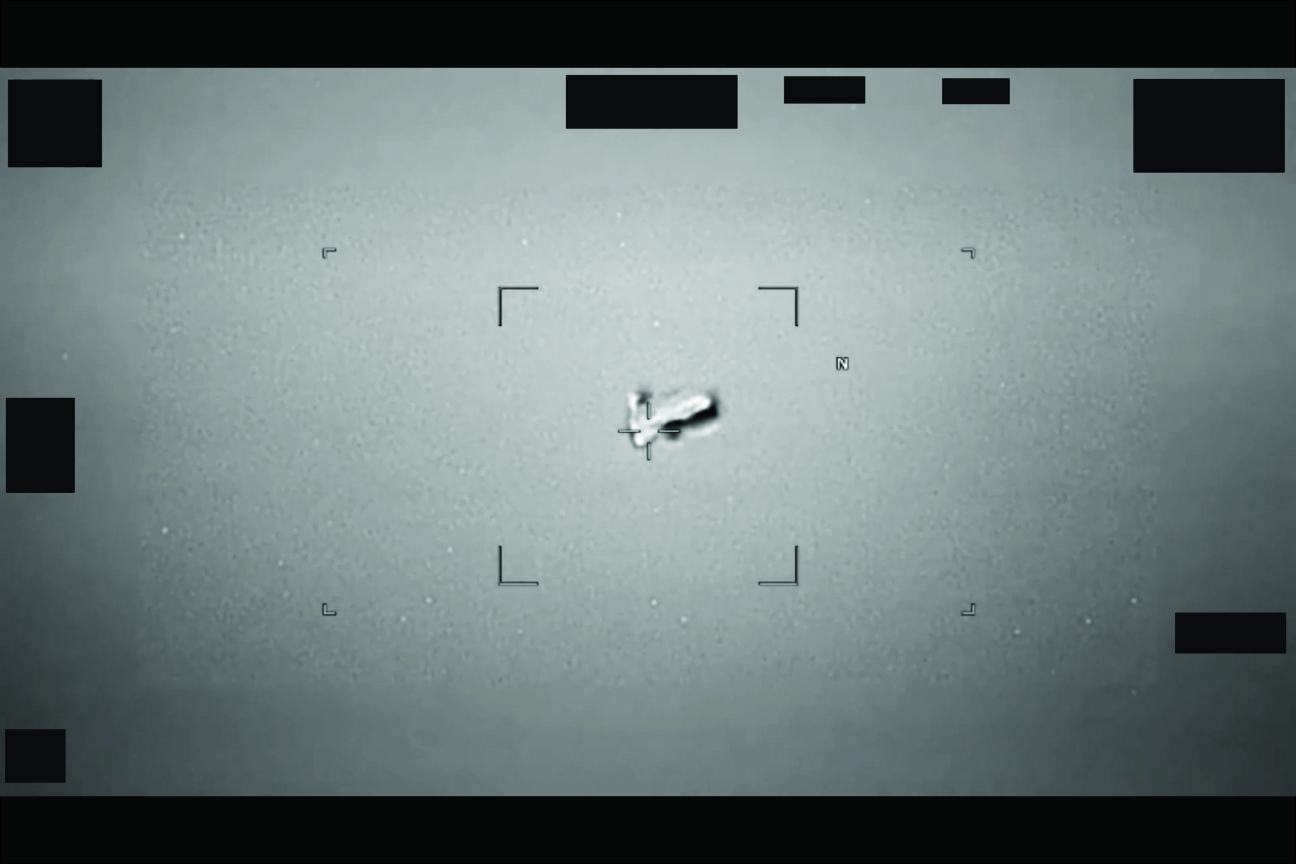 dow uap pr46 unresolved uap report indopacom 2024
Vendittelli's DEBRIEFED appearance in June 2026 went further into unusual territory. According to the show's description, he discussed cases involving police officers, alleged reincarnations, Vatican secrets, and "classified government briefings that connect Jesus, Mary Magdalene, and extraterrestrials" — including, reportedly, what Lazar was allegedly shown in those religion files. These are extraordinary claims resting on a single filmmaker's account of conversations with a single primary source. The sourcing architecture here is thin by any journalistic standard, and the tier-4 blog post presenting the episode should be read with that clearly in mind.
Walton, Rogers, and the Problem of the Deathbed
On a different but structurally parallel track, the question of Travis Walton's 1975 abduction account underwent a significant new stress test in early 2026. Mike Rogers — the logging crew foreman who was present when Walton allegedly vanished, who appeared in Fire in the Sky, and who had been both Walton's most important corroborating witness and, periodically, his most damaging critic — died on February 6, 2026, at 78.
What followed his death was messy and unresolved.
A commenter named Charlie Wiser posted on Kevin Randle's blog A Different Perspective — a tier-4 source, though Randle is a longtime researcher with credibility in the field — claiming that Rogers' daughter had recorded a deathbed confession in which her father admitted to hoaxing the Walton abduction. The confession, as Wiser relayed it, included a specific operational account: Rogers drove the truck, Walton got out deliberately, the "zapping" was staged, and the UFO was a contrivance. Wiser also claimed Rogers admitted to involvement in the first part of the Phoenix Lights sighting.
Randle told his Coast-to-Coast AM audience about the claim before he had vetted it — he said so explicitly — then held it back from broadcast, noting he was not comfortable with the information's provenance.
Jennifer Stein, director of the documentary Travis: The True Story of Travis Walton, pushed back directly through podcaster Ryan Sprague's platform Somewhere In The Skies. She called the deathbed confession "incredibly disrespectful" and said Arizona filmmaker Patrick James had visited Rogers three days before his death and received a completely different account. "If this were truly a final statement," Stein said, "why didn't his daughter post the audio? Why just a text, and then take it down?"
Wiser countered that the daughter had posted to Quora and then deleted the post, that a screenshot existed on his Twitter, and that a recording had been made — just not yet released.
 d ma852 001
Randle's conclusion, stated plainly: the deathbed confession tale "doesn't seem to be accurate." But he was careful to note that this left the underlying evidentiary problem exactly where it had been. Rogers had, in a March 2021 Facebook post, publicly withdrawn his claim to have witnessed the abduction. He later walked that back. Two days after the 2021 post, he apparently told film producer Ryan Gordon — in remarks quoted by Randle — that the sighting was "all a staged thing." Rogers and Walton reconciled, and Rogers issued a retraction. The retraction did not erase the earlier statement.
This is what the Walton case looks like from the inside: a witness who gave contradictory accounts while alive, a deathbed confession claim that is unverified and possibly fabricated, a counter-narrative supported by a filmmaker who had her own documentary interest in the case, and a recording that may or may not exist and has not been produced.
In July 2026, a conversation between Lazar and Walton was filmed at the Flying Saucer Diner and circulated under the title Bob Lazar and Travis Walton Compare Their Most Controversial UFO Experiences. The tier-3 site Latest UFO Sightings described it as covering craft details, government secrecy, Hollywood's dramatization of the abduction, physics, and free energy. No transcript or primary clip analysis is available in the sources reviewed here. What the conversation apparently does is place two of the most contested figures in American UFO history in the same room, talking to each other — which is itself a kind of data point about the moment we're in, if not about the underlying claims.
What the Pattern Suggests, and What Would Close It
Taken together, these threads suggest something worth stating carefully: the evidentiary ecosystem around both Lazar and Walton is dense with secondary and tertiary claims, filmmaker-mediated accounts, and social network corroboration, but it remains structurally dependent on a small number of primary witnesses whose testimony is internally inconsistent or contested, and on institutional connections — to Bigelow, to BAASS, to the DIA's AAWSAP program — that are real but whose implications for the Lazar story specifically have never been documented in primary source material.
Vendittelli's acknowledgment that parts of the story may be missing is the most honest thing anyone close to the Lazar case has said publicly in years. It does not vindicate Lazar. It does suggest that whoever controls the institutional knowledge about what actually happened at S4 has not made that knowledge available to the one filmmaker who has most seriously tried to reconstruct it.
The specific document that would change this picture is the one that does not yet exist in any publicly available form: a contemporaneous record, from within Bigelow Aerospace Advanced Space Studies, BAASS, or the Defense Intelligence Agency's AAWSAP program, that either places Lazar in a documented operational context or definitively excludes him. Vallee's diaries are the closest thing available, and they don't go there. If Patrick James releases his documentary about the Walton case — which Stein said in March 2026 was forthcoming — and if Rogers' alleged recording surfaces alongside it, the deathbed question at least becomes answerable. Until then, the pattern is suggestive, the gaps are load-bearing, and the films are filling space that the documents have not.