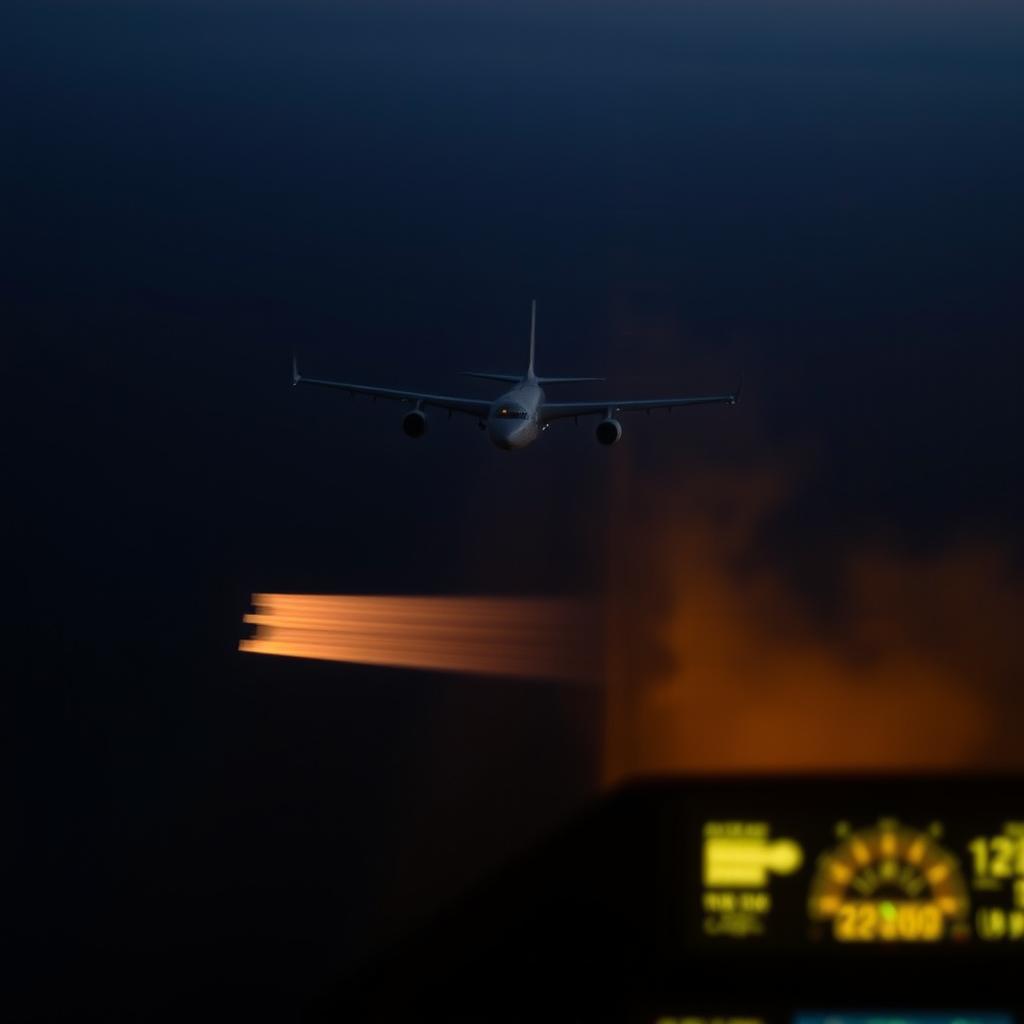
A declassified U.S. Central Command mission report, approved for release to the All-domain Anomaly Resolution Office (AARO) on March 27, 2026, documents a November 18, 2016, incident in which a U.S. Navy P-8A Poseidon maritime patrol aircraft observed an unidentified low-flying object approximately 55 nautical miles northwest of Latakia, Syria, traveling at roughly 500 knots on a southeasterly heading. The document, designated DOW-UAP-D55 and declassified by Major General Richard A. Hamson, USCENTCOM Chief of Staff, represents an early formal record of unexplained aerial activity logged by U.S. naval aviation assets in the region.
What the Crew Observed
According to the mission report, the P-8A was conducting monitoring operations associated with Carrier Task Group 67.1 (CTG 67.1) in the Eastern Mediterranean when, at 13:02 Zulu on November 18, 2016, the aircraft's electro-optical/infrared (EO/IR) sensor detected what the crew initially characterized as a possible missile launch from an origin described as unknown. The object appeared to be operating in a sea-skimming mode — a flight profile typically associated with anti-ship cruise missiles — at approximately 500 knots.
The P-8A was positioned 26 nautical miles south of the point of initial detection. Visual contact was maintained for approximately two minutes before the crew lost sight of the object in the vicinity of 40 nautical miles northwest of Latakia. During that window, the report notes, the object was observed to pass between the Russian vessel INGUL ARS and one additional unidentified vessel. Weather conditions were assessed by the P-8A aircrew as clear with no visibility limitations, strengthening the evidentiary weight of the EO/IR observation.
Official Assessment and Limitations
The mission commander for the P-8A characterized the interaction as safe. CENTCOM's own analytical comment in the document attempts to contextualize the event: according to the report, while this was described as "the first observed occurrence of possible missile activity by P-8 aircraft in the Eastern Mediterranean," CENTCOM assessed the activity to be "standard activity consistent with the assessed activity of the KCTG" — a reference to the Russian carrier task group then operating in the region, centered on the Admiral Kuznetsov carrier group deployed to Syrian waters in late 2016.
That institutional framing — attributing the object to routine Russian naval activity — is notable, though the report does not name a specific weapon system or provide corroborating signals intelligence. The origin of the object is listed explicitly as "unknown" in the flight path description, and no launch platform is identified. The discrepancy between the hedged analytical comment and the unresolved origin warrants caution in treating the CENTCOM characterization as definitive.
The report references associated video footage via an embedded link, though that footage does not appear to have been publicly released alongside the declassified document. The redaction notation "(b)(6)" appears in connection with at least one personnel-related field, consistent with standard privacy exemptions under the Freedom of Information Act.
Context and Significance for the UAP Record
The document is catalogued under USCENTCOM Mission of Record series MOR 26-038 through MOR 26-046, suggesting it is part of a broader batch of materials processed for AARO review. Its release aligns with ongoing congressional mandates requiring the executive branch to declassify and transmit UAP-relevant records to AARO, the office established under the fiscal year 2022 National Defense Authorization Act to serve as the government's central repository for such reports.
The November 2016 timeframe places this incident roughly a year before the New York Times' December 2017 reporting that catalyzed widespread public and legislative attention to UAP. The P-8A's role as a sensor platform — equipped with advanced EO/IR, radar, and signals intelligence capabilities — lends operational credibility to the detection, even as the two-minute observation window and the absence of confirmed origin data leave the event formally unresolved.
What the record establishes is narrow but documented: a U.S. naval aviation crew, operating under clear conditions with calibrated sensors, logged an object of unknown origin traveling at speeds and altitudes consistent with a sea-skimming missile, in contested airspace, without being able to assign it to a confirmed platform. Whether the CENTCOM assessment attributing the event to routine Russian task group activity is accurate remains an open question that the available declassified record does not fully answer.