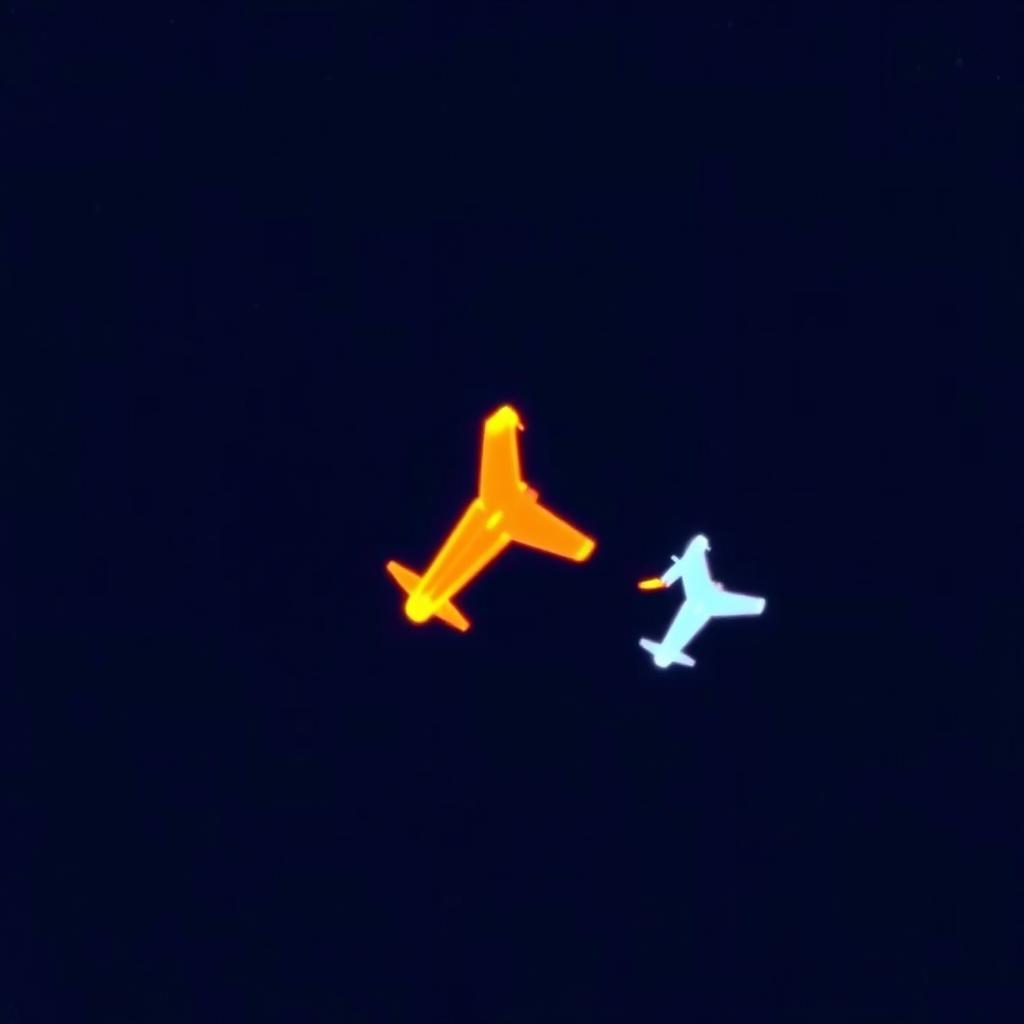
The U.S. Indo-Pacific Command forwarded to the All-domain Anomaly Resolution Office a one-minute, 59-second infrared sensor video depicting three unidentified objects observed from a U.S. military platform in 2023, according to a Department of War disclosure designated DOW-UAP-PR47. The report is listed as unresolved, and no analytical conclusion regarding the objects' nature or origin has been published.
What the Footage Shows
According to the Department of War disclosure, the infrared sensor captures three distinct areas of contrast that remain generally centered within the frame across the full duration of the recording. The objects appear to hold a fixed position and orientation relative to one another throughout the one minute and 59 seconds of available footage.
The disclosure includes a video description offered explicitly for informational purposes. The Department of War stated that the description should not be read as reflecting "any analytical judgment, investigative conclusion, or factual determination regarding the described event's validity, nature, or significance." That hedge is standard language in AARO public releases and signals that the case has not been adjudicated — not that the footage has been assessed and found inconclusive.
No information was provided regarding altitude, speed, heading, or the specific sensor platform involved. The geographic location within the Indo-Pacific theater was not disclosed beyond the submitting command's area of responsibility, which spans roughly half the globe, from the U.S. West Coast to the Indian subcontinent.
Reporting Gaps and Chain of Custody
A notable gap in this submission is the complete absence of any accompanying observer account. According to the Department of War record, the reporter provided neither oral nor written description of the observation at the time of filing. That omission limits AARO's ability to contextualize what the sensor recorded — investigators typically rely on operator testimony to establish factors such as whether the objects were detected on radar, whether evasive maneuvers were observed, and what environmental conditions prevailed.
The infrared sensor modality itself introduces interpretive constraints that are well-documented in the UAP literature. Infrared systems record thermal contrast rather than visible-light imagery, meaning that atmospheric phenomena, sensor artifacts, and conventional objects with distinct thermal signatures can produce readings that resist easy categorization without corroborating data. The disclosure does not indicate whether any additional sensor data — radar, electro-optical, or signals intelligence — was collected during the same observation window.
INDOPACOM's submission of the footage to AARO follows the reporting pipeline established under the National Defense Authorization Act mandates that created the office in 2022. AARO is charged with detecting, identifying, and attributing UAP and, where possible, assessing whether they represent foreign collection activities, safety-of-flight concerns, or other national security equities.
Status and Context
The case is publicly categorized as unresolved. The Department of War has not indicated whether AARO requested supplementary data from INDOPACOM, whether the submitting platform crew was subsequently interviewed, or whether the footage was shared with intelligence community partners for further analysis.
The release of this report as a public disclosure document — rather than a classified summary — is consistent with AARO's mandate to produce an unclassified record of UAP cases where possible. However, the thinness of the accompanying information means the public record, as it stands, consists of a physical description of video content and no further context. Whether more detailed analysis exists in classified channels is not addressed by the disclosure.
Three objects maintaining a fixed relative position and orientation across nearly two minutes of infrared footage is a detail that warrants systematic follow-up: formation-holding behavior is atypical of known atmospheric phenomena and balloons, which tend to drift independently under wind shear at altitude. It is equally consistent, however, with sensor artifacts, birds in tight formation, or other conventional explanations that cannot be ruled out given the available data. No determination has been made, and the record does not support one.
DOW-UAP-PR47 joins a growing catalog of AARO case disclosures for which attribution remains open. The office has stated in prior congressional testimony that the majority of submitted UAP reports involve insufficient data to reach a definitive conclusion — a systemic problem that the Pentagon has acknowledged and attributed in part to the absence of standardized reporting protocols across military commands.